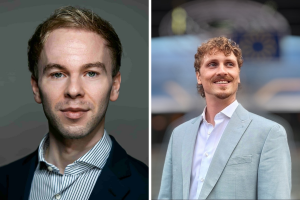

Cultural production is nowadays strictly linked to digital platforms. These platforms tend to transition from the role of mere tools to the role of infrastructures that invisibly lock in creators throughout the whole process. This research aims to uncover current dynamics of cultural production through the investigation of the significant case study of Roblox, a closed platform environment, to build the knowledge base for a socially sustainable growth of digital platforms. The research project is conducted by Camilla Rinciari under the scientific supervision of Paolo Volonté.
The research employs qualitative and non-intrusive methodologies, such as auto-netnographic research, software walkthroughs, observant play on Roblox and Unity, and informal conversational exchanges with creators within public and semi-public developer hubs such as Discord. The types of data processed include common, non-sensitive information, specifically platform nicknames used solely for contact and coordination, age, country of residence, and spontaneous accounts regarding working conditions or professional contexts shared during research sessions. The collection, profiling, or processing of personal data is strictly excluded.
Participation in the study is entirely voluntary. Prior to initiating any conversational exchange, participants receive a standardized digital briefing specifying the academic purpose, voluntary nature, and the right to withdraw or request data deletion at any time. Informed consent is gathered through explicit digital confirmation.
All collected data undergoes immediate pseudonymization and anonymization at the point of transcription through codes that decouple the information from direct identifiers. Research materials and field notes are stored in digital format within secure institutional cloud repositories provided by Politecnico di Milano with restricted access. Data is retained for the duration required to complete the research project and publish scientific findings, and for a precautionary maximum period of five years, after which it is permanently deleted.
In compliance with the Regulation (EU) 2016/679 (GDPR), participants are informed that any personal data collected during the empirical investigation is processed exclusively for scientific and academic research purposes. The legal basis for this processing relies on the performance of a task carried out in the public interest pursuant to Article 6, paragraph 1, letter e) of the GDPR. The Data Controller is Politecnico di Milano (dirgen@polimi.it), and the Data Protection Officer (DPO) can be contacted at privacy@polimi.it.
Data subjects may exercise their rights under Articles 16 to 21 of the GDPR (including access, rectification, erasure, or restriction) by contacting the researcher directly at camilla.rinciari@polimi.it or the DPO at privacy@polimi.it.